Scope of steel machining
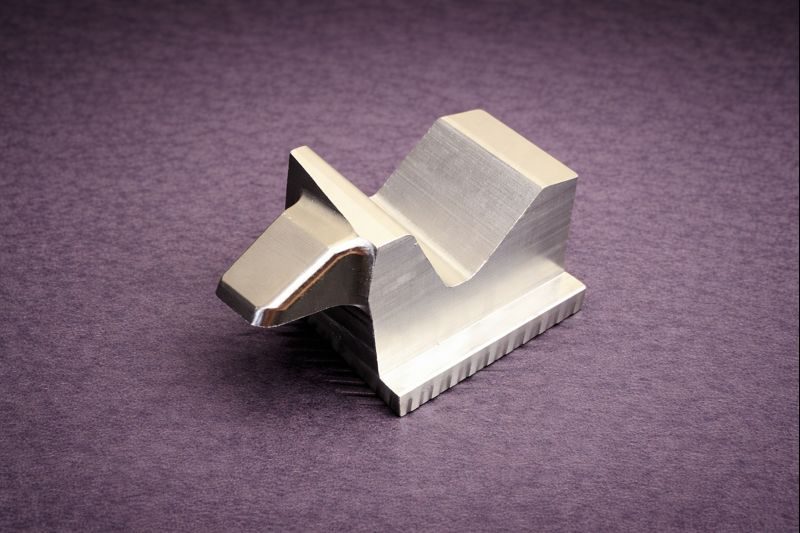
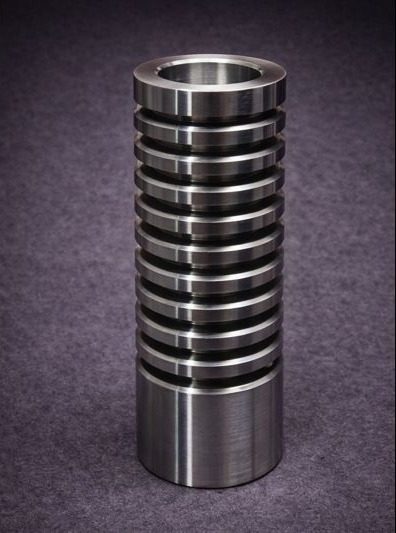
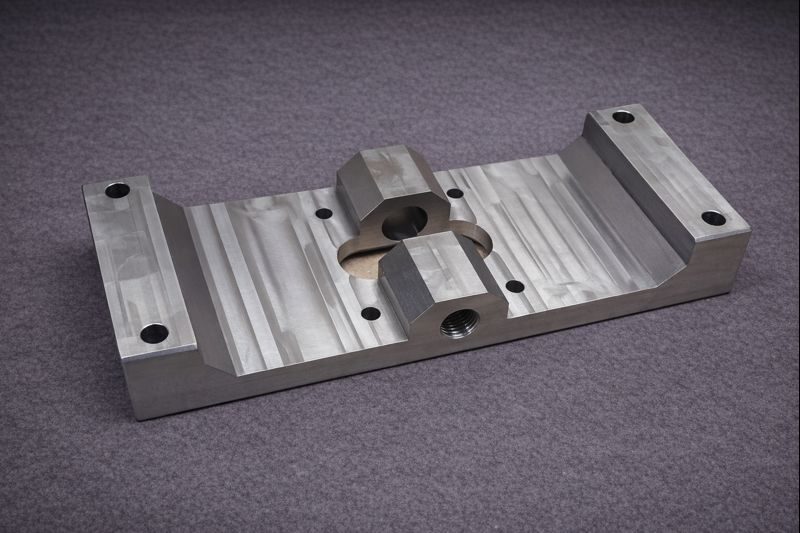
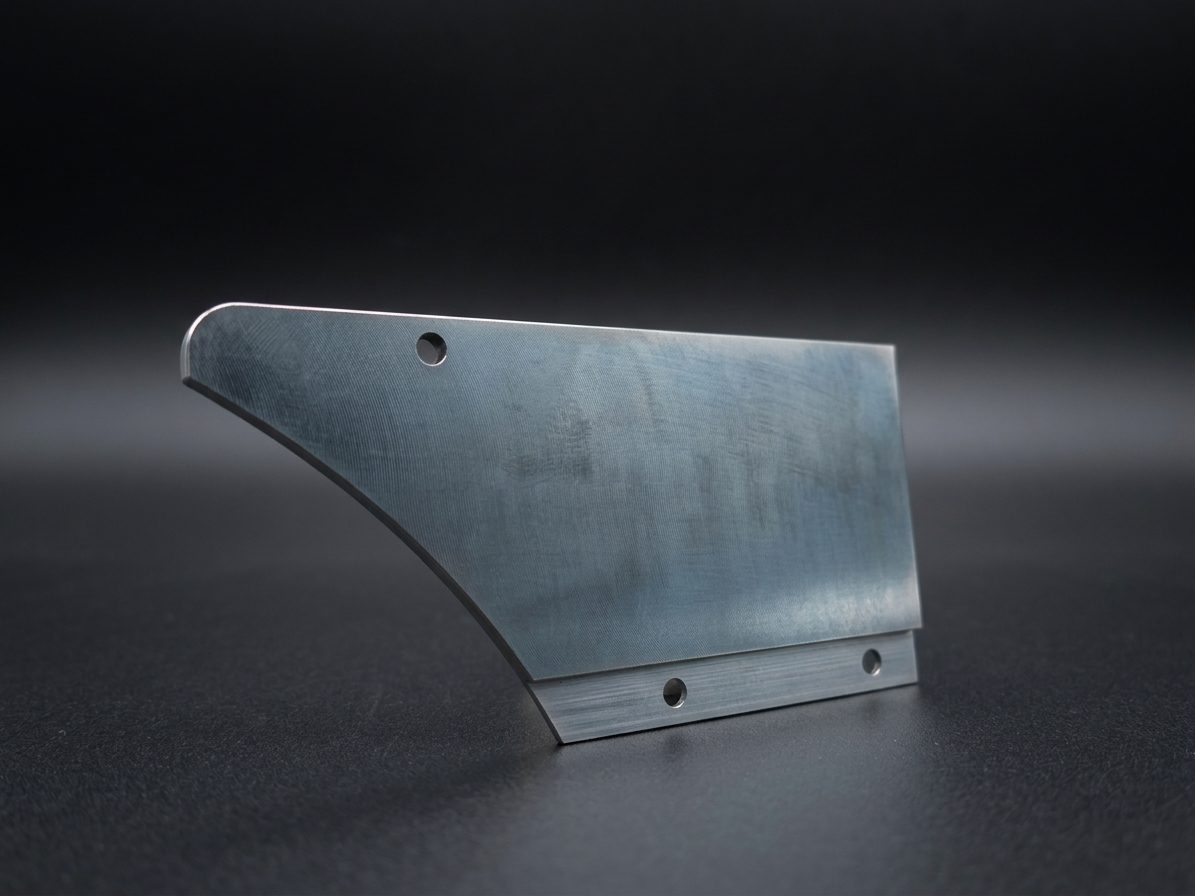
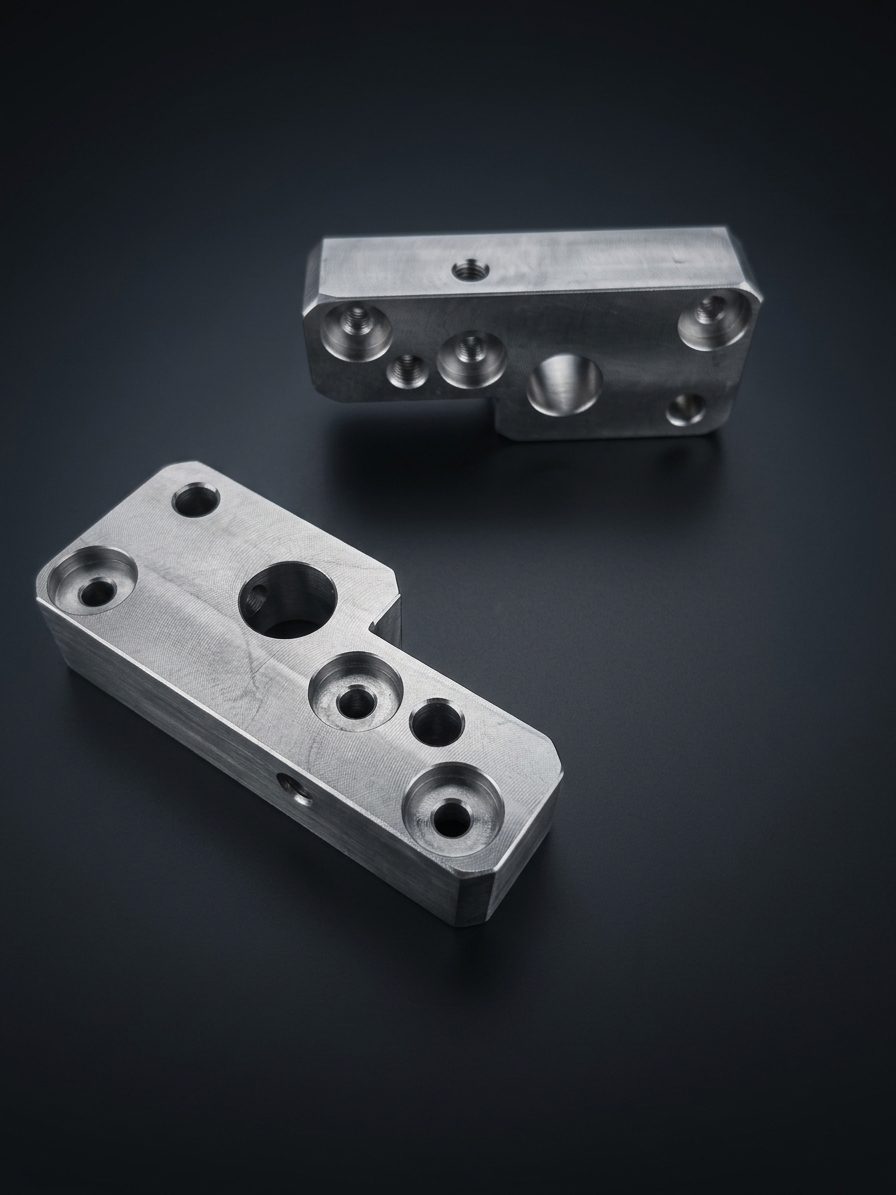
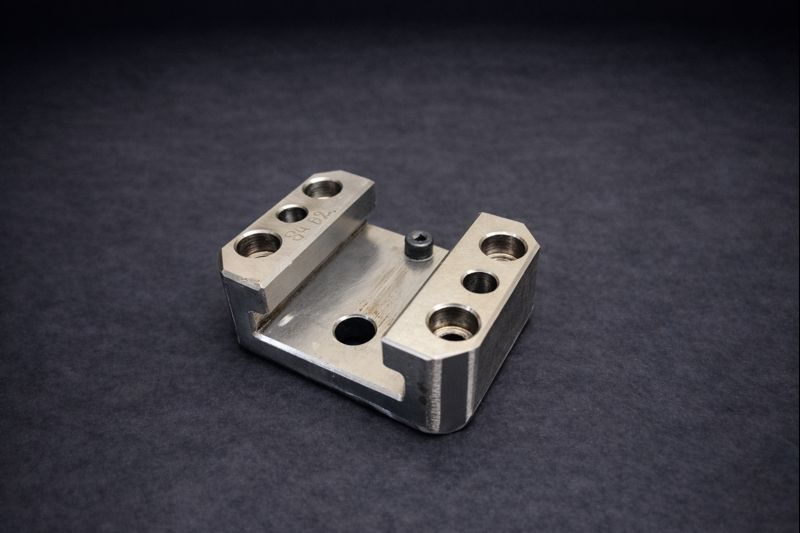
In structural and tool steels we make gearbox brackets, sleeves with circumferential grooves, manifold blocks, scraper plates, wear plate brackets, brackets with locating seats and forming components (die inserts). These are usually loaded, wearing or datum parts — what makes them fit for purpose is the relative position of the holes and the quality of the mating surfaces.
We also machine welded parts, prepare parts for special processes and finish them afterwards — including hardened steel parts where finish machining follows heat treatment.
Materials: 42CrMo4, tool steels
42CrMo4+QT — quenched and tempered alloy steel with increased hardness and strength; it needs suitably chosen cutting data. We turn sleeves with a series of evenly spaced grooves from it and mill gearbox brackets. 1.2316 — tool steel with improved corrosion resistance: manifold blocks, scraper plates. NC11LV (1.2379) — tool steel hardened to 58 HRC for wearing parts and forming components. Superplast 400 — dimensional stability and surface quality at mating faces.
Machines and capabilities
Steel is milled on three vertical machining centres (Fanuc, BBT40/BT40; largest working envelope X 1100 · Y 600 · Z 600 mm) and turned on three CNC lathes. We cut metric and pipe threads, precision-fit bores, pockets and slots. Tool steel machining often depends on the order of operations, so heat treatment, thermochemical treatment and PVD coatings are coordinated with subcontractors to keep the sequence of machining and hardening in line with the part's requirements.
Industries we supply
Machine building, the pharmaceutical industry (machine drives), automation and robotics, hydraulics and pneumatics, and maintenance — wear parts and spare parts reproduced from a sample, such as an NC11LV die insert hardened to 58 HRC that fitted the machine without rework.
How we work and quote
Send a drawing and a 3D model with the steel grade, required hardness or heat treatment condition, quantity and date. Process comments — for example stock allowance for hardening — are sent with the quotation. We work to ISO 9001:2015; material certificates and certificates of conformity are supplied as required by the order, and an inspection report on request. Our production plant is in Lublin, Poland, with delivery within Poland and abroad.